The Break-Room Fridge Is a Museum of Bad Decisions
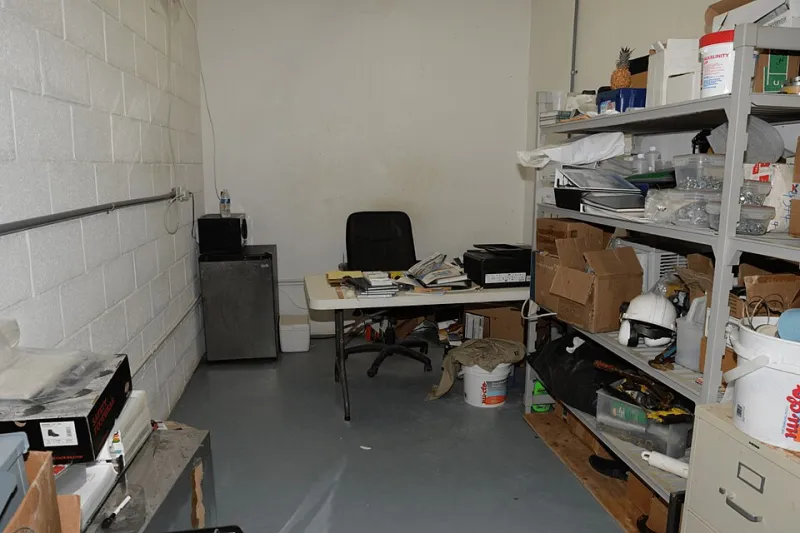
Photo: Federal Bureau of Investigation, Public domain, via Wikimedia Commons
The office fridge is not a fridge. It is a museum, a lab, a passive-aggressive message board, and a slow-motion science fair. Open the door on a Friday afternoon and you will find the same things you always find: a stack of Tupperware with no names, a condiment graveyard, a bag of something that might be bread, and one container in the back that has been there so long it has its own origin story. Every workplace has one. Every workplace pretends it does not.
In 2026, the break-room fridge has become a little more public. Tiny fridge cameras are cheap. Group chats are always open. Someone takes a photo of a mystery container and posts it to the team channel with a simple question: is this anyone's? The result is a daily tribunal. The fridge was always a shared space. Now it has a surveillance state and a comment section.
The Stratigraphy of a Shared Fridge
Archaeologists talk about layers. Office fridges have layers too. The top shelf belongs to the optimists: fresh salads, meal-prep containers, yogurt with a plan. The middle shelf belongs to the realists: leftovers from Tuesday, a half-eaten sandwich, a energy drink that someone is saving for a bad afternoon. The bottom shelf belongs to the historians. That is where the ancient grains live. That is where the condiments go to retire. That is where the mystery bag sits in silent judgment.
The door is its own ecosystem. There is always a ranch dressing from a brand that no longer exists. There is a jar of something pickled that someone brought in for a potluck in a previous era. There is a tiny bottle of hot sauce with a label that has faded into abstraction. Nobody throws any of it away because none of it belongs to anyone, and yet all of it belongs to everyone. The door is the fridge's junk drawer. The door is where hope goes to become vinegar.
Common Artifacts: Tupperware, Condiment Graveyard, Mystery Bag
The most common artifact is the unlabeled Tupperware. It is the official currency of office civilization. It arrives with good intentions and leaves with a nickname. There is the square one with the blue lid. There is the round one that smells faintly of curry and regret. There is the one with a fork still inside, which suggests someone intended to come back but got distracted by a meeting, a crisis, or a better lunch.
The condiment graveyard is next. Every fridge has a shelf or a door bin full of jars that are technically still food and practically historical documents. There is yellow mustard, brown mustard, a spicy mustard nobody remembers buying, ketchup, hot sauce, soy sauce, a dressing that separated into oil and sadness, and one jar of salsa that has been open since a team-building event in a year nobody can agree on.
The mystery bag is the wild card. It might be a sandwich. It might be a bagel. It might be a bag of grapes that has become a raisin experiment. The mystery bag is always tied with a twist tie and always has no name. It is the office equivalent of a locked chest in a video game. You do not open it. You just respect its presence.
The Most Feared Leftovers, Ranked
Coworkers have strong opinions about what should and should not enter the shared fridge. Here is the unofficial ranking of the foods most likely to trigger a group-chat audit.
- Fish. Any fish. Even if it is in a sealed container, even if it is labeled, even if it is technically someone's healthy lunch. The fear is not rational. The fear is real. The microwave is a separate issue, but the fridge is where the dread begins.
- Egg salad. It is a food that looks like it is already thinking about retiring. The smell is polite at first and then it is not. Egg salad in a shared fridge is a trust exercise.
- Broccoli that has gone to war. Broccoli is fine when it is fresh. After a few days in a shared fridge, it develops a personality. After a week, it develops a foreign policy.
- Unlabeled soup. Soup is already a mystery. Unlabeled soup in a shared fridge is a mystery wrapped in a riddle wrapped in a plastic container with no lid. Nobody knows what is in it. Nobody wants to be the one who finds out.
- Birthday cake with no name. This one is tragic because it started as a celebration. Now it is a slice of frosting and regret on a paper plate. Is it still good? Probably. Is anyone brave enough to check? No.
- Condiments from a previous decade. They are not leftovers, exactly. They are artifacts. They deserve a placard, not a fork.
- The bag that might be a sandwich. See above. Respect the mystery.
Sticky Notes and the Grammar of Passive Aggression
The sticky note is the fridge's native language. It is passive-aggressive, but it is also strangely poetic. 'Please label your food.' 'This is not a science experiment.' 'Whoever left the container in the back, it has a name now. It is Gary.' The notes start polite and get weirder as the week goes on.
There is a whole grammar to it. A note with a date is a warning. A note with an exclamation point is a boundary. A note with a drawing of a skull is a cry for help. A note that says 'clean me' on a container that is clearly beyond cleaning is a haiku about mortality. The fridge is where office communication goes to become sticky and slightly passive-aggressive. It is also where it becomes honest in a way that email never does.
The 2026 Twist: Fridge Cams and Group-Chat Audits
This is the year the fridge got a audience. Tiny cameras, some built into the fridge, some just sitting on a shelf, let people check the break-room inventory from their desks. The group chat has become a food court. Someone posts a photo of a container with a note that says 'Is this anyone's?' The replies come in fast. That is mine, I think. No, wait, mine has a blue lid. Is it the one with the rice? I do not think that is rice anymore.
The audit is now a social event. On Friday afternoons, someone brave opens the fridge and takes a census. The group chat votes on what stays and what goes. The vote is not binding. The vote is not even fair. But it is entertaining, and it is a way to avoid the real problem, which is that nobody wants to throw away someone else's lunch. The camera did not solve the mystery. It just made the mystery go viral in a very small office.
The Unspoken Rules of Throwing Away Someone Else's Lunch
There are rules. They are not written down, but they exist. If it has mold, it goes. If it has a name and a date from this week, it stays. If it has a name and a date from last month, it is archaeology and should be handled with gloves. If it predates a major holiday, it is not food anymore. It is history. If it is a condiment, do not touch it. Condiments are forever. Condiments are the one thing in the fridge that everyone agrees should not be thrown away, even though nobody uses them.
The hardest rule is the one about ownership. You cannot throw away someone else's lunch unless you are prepared to have a conversation about it. That conversation will be polite. It will also be remembered. The office fridge is a small society, and small societies have long memories. The person who threw away the leftover pizza in 2026 will be talked about in 2027. That is just how it works.
Exit Interview With the Shelf
The break-room fridge is a mirror. It reflects who we are: hopeful, forgetful, and terrible at labeling. It is a museum of bad decisions and good intentions. It is a group chat with shelves. It is the place where a sandwich becomes a mystery and a sticky note becomes a constitution.
So next time you open the door, take a moment. Look at the Tupperware. Read the notes. Respect the condiment graveyard. And if you see a container in the back with no name and a date from a different season, do not open it. Just call it Gary and move on. The fridge has seen enough.